CCGrid 2024 keynote: AI and data in computer system research

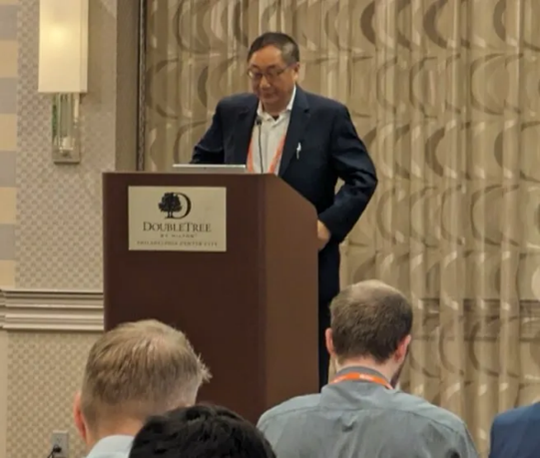
Xian-He Sun gave a keynote at the 24th IEEE/ACM International Symposium on Cluster, Cloud and Internet Computing (CCGrid 2024) in Philadelphia on May 7, 2024. In "AI & Data: Challenges and Opportunities in Computer System Research", he argued that data access, not computation, now limits how far computer systems scale, and showed three GRC systems built to address it.
The storage wall
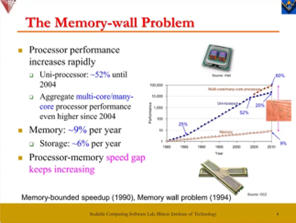
Big data, AI and other data-driven applications produce massive amounts of data and new demands for data discovery. They have made computing data-centric. Disk-based storage, however, has improved far more slowly than processors and memory, which leaves a wide I/O performance gap. Data discovery also needs new forms of data, which puts further strain on memory and storage systems.
Sun described this as a storage wall. It calls for performance analysis that puts data throughput ahead of floating-point operations, and for redesigns across operating systems, compilers and hardware that exploit new storage technologies through data tiering, compression, indexing and prefetching. He also noted that data systems are harder to design than computing systems.
Models for the memory hierarchy
The talk drew on two GRC models of memory performance:
- The Concurrent Average Memory Access Time (C-AMAT) model, published in IEEE Computer in 2014, describes memory performance in systems that serve many accesses at once. It separates the miss penalties that concurrency hides from those that still stall the processor.
- Layered Performance Matching (LPM), published in IEEE TPDS in 2019, uses C-AMAT to tune each layer of a memory or storage hierarchy so that it keeps pace with the layer above. The aim is cache-like performance with the capacity of the lower layers.
Three systems
Sun organized the systems part of the talk around three problems:
- HPC I/O. Hermes is an intelligent, multi-tiered, dynamic and distributed I/O buffering system that applies C-AMAT and LPM to place data across memory, NVMe, burst buffers and the parallel file system. It is supported by NSF and has been released as open source with the HDF5 library.
- Active data in the cloud. ChronoLog, an NSF CSSI project, manages activity and log data that is written and read continuously across a distributed environment.
- Metadata. Coeus, a DOE ASCR project, enriches the metadata that manages scientific data so that it can support scientific insight and complex queries.
He closed with the wider question of how information should be represented for learning and data discovery, and with the research opportunities that the AI and big data era opens for computer scientists and engineers.
The session
The keynote opened the morning of Tuesday, May 7, from 9 to 10 a.m. in the Symphony Ballroom, chaired by Jie Wu. CCGrid 2024 ran from May 6 to 9.