Jaime Cernuda and Luke Logan join the research faculty

Jaime Cernuda and Luke Logan became assistant research professors at Illinois Institute of Technology in January 2026. Both trained as PhD students in the Gnosis Research Center and stay with it, carrying their work on storage and data movement into IOWarp, the lab's NSF-funded platform for scientific data and AI agents.
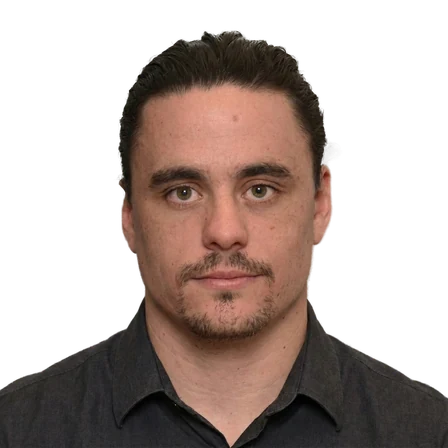
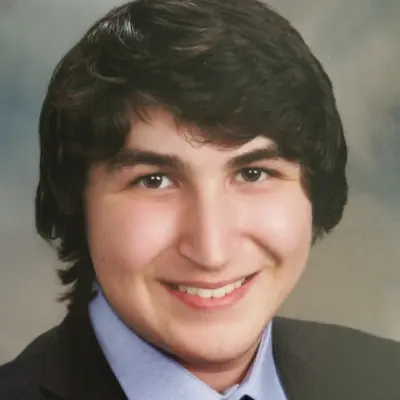
Luke Logan: storage that programs can shape
Logan first joined Illinois Tech as an undergraduate researcher in 2017 and began his PhD in 2020. His degree was conferred in December 2025. His research asks how to make distributed storage and operating systems more programmable, portable and fast, and each of his main systems answers part of that question:
- LabStor (SC22) is a modular platform for building customized, high-performance I/O stacks in user space.
- MegaMmap (SC24) is a software distributed shared memory that tiers DRAM with NVMe, SSD and HDD, so applications can work on datasets larger than memory without writing out-of-core code. Logan presented it in Atlanta; the SC24 article covers the design and results.
- pMEMCPY (REX-IO 2021) is a small, portable I/O library for storing data in persistent memory.
He also co-authored an evaluation of the DAOS object store for simulation and deep learning workloads, first at the CHEOPS 2023 workshop and then in ACM SIGOPS Operating Systems Review in 2024.
Jaime Cernuda: data as streams
Cernuda joined the lab in August 2020 and defended his dissertation in late 2025. His work treats scientific data as something in motion, moving through tiers of storage and stages of analysis:
- HFlow (CLUSTER 2021) is a dynamic, elastic, multi-layered data forwarder.
- Hades (CCGrid 2024) is a context-aware I/O layer that computes selected quantities while simulation data is in transit, so later analysis queries do not have to traverse large files again.
- HStream (ICPP 2024) is a hierarchical data streaming engine for high-throughput scientific applications.
- Jarvis (PDSW 2024) is an extensible Python framework that deploys, manages and monitors software on heterogeneous HPC clusters, with pipelines that stay portable across machines.
What they work on now
Both have been on the IOWarp team since the project started in August 2024. IOWarp is funded by an NSF framework grant shared with the University of Utah. It organizes scientific data, metadata, telemetry and computational state so that workflows and AI agents can find and use them. MegaMmap and Jarvis are both part of the IOWarp publication record. Logan and Cernuda are also the two main developers of Jarvis-CD (opens in a new tab), the open-source tool behind the Jarvis paper, and they now carry that work forward as researchers rather than students.
A third faculty arrival
Bogdan Nicolae also joined GRC in January 2026. He is a computer scientist at Argonne National Laboratory and holds a Research Professor appointment at Illinois Tech. His research covers fault tolerance, checkpointing and data management for HPC and AI, and he received a DOE Early Career Research Program award (opens in a new tab) in 2020. He leads the Illinois Tech part of MPI4AI, an NSF project that extends Open MPI for large-scale AI training and inference, and has worked with GRC since 2023 as an Argonne partner on the DOE-funded DTIO project.
Update (May 2026): Cernuda's PhD degree was conferred in May 2026.