Introducing the Gnosis Research Center
After two decades of research in scalable computing and data-centric systems, the Scalable Computing Software (SCS) Laboratory became the Gnosis Research Center (GRC) at Illinois Institute of Technology on April 23, 2023. This post introduces the center.
From SCS Lab to GRC
Dr. Xian-He Sun founded the Scalable Computing Software (SCS) Laboratory at Louisiana State University and brought it to Illinois Tech when he joined the Department of Computer Science in August 1999. His theoretical work includes the Sun-Ni Law for scalable parallel computing (1990) and, at Illinois Tech, the Concurrent Average Memory Access Time (C-AMAT) framework for memory system evaluation.
Over the next two decades, the lab's scope expanded from theoretical models into systems research. Hermes brought multi-tiered I/O buffering. LABIOS bridged the gap between HPC and Big Data storage paradigms, earning the Karsten Schwan Best Paper Award at HPDC 2019. ChronoLog introduced a distributed log store for scientific activity data. Each project reflected a consistent thesis: data movement, not computation, is the bottleneck of modern science.
By 2023, the operation had grown well beyond a single-PI lab. Research scientists, software engineers, and doctoral researchers were working across a portfolio of federally funded projects spanning NSF, DOE, LLNL, Argonne, and Pacific Northwest National Laboratory. The scope demanded a new structure.
Why "Gnosis"
γνῶσις (gnōsis) is Greek for knowledge gained through investigation. The name captures what this center does: we produce knowledge by constructing and deploying the storage, I/O, and memory systems that scientific computing depends on.
What GRC Does
GRC develops advanced solutions for high-performance computational capabilities at the intersection of scalable computing and data-driven discovery. Three objectives define the center's mission:
Advance scalable computing technologies. GRC builds middleware, runtime systems, and storage architectures for modern scientific workloads. Projects like IOWarp and Hermes directly address the I/O performance gap that limits computational science.
Develop tools for data-driven domains. Time-series analytics, workflow optimization, deep learning I/O pipelines. Projects like ChronoLog and DeepIO serve the growing convergence of HPC, AI, and Big Data.
Bridge researchers and infrastructure. GRC connects data scientists who need performance with systems architects who build it. The center's open-source releases, benchmarks, and national lab partnerships make that bridge tangible.
The Team
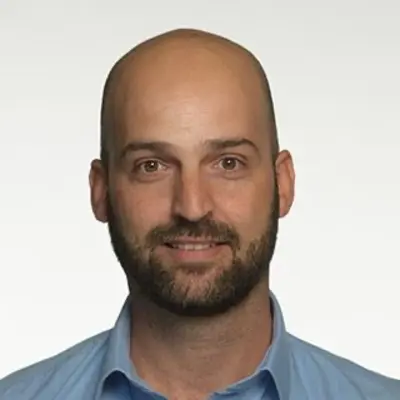
Dr. Xian-He Sun serves as Founding Director, bringing the theoretical foundations and institutional relationships built since 1999 at Illinois Tech. Dr. Anthony Kougkas serves as Co-Founder and Executive Director, leading the systems-building effort that turned theory into funded software projects.
The research team includes PhD candidates, research scientists, and software engineers working across storage systems, memory architectures, deep learning I/O, and distributed computing. GRC also maintains active collaborations with Argonne National Laboratory, Lawrence Livermore National Laboratory, Pacific Northwest National Laboratory, and industry partners.
Open by Default
Every major GRC system ships as open-source software. Hermes, ChronoLog, IOWarp, and LABIOS are all publicly available, and GRC researchers co-developed the DLIO benchmark with Argonne. This is deliberate: the center's mission requires that the tools we build reach the researchers who need them.
What's Ahead
GRC's current portfolio spans intelligent I/O buffering, distributed time-series storage, deep learning data pipelines, memory system optimization, and large-scale workflow orchestration. As scientific computing enters an era where AI, HPC, and Big Data workloads converge on shared infrastructure, the need for principled data-centric systems research will only grow.
We built GRC to meet that need. Welcome.