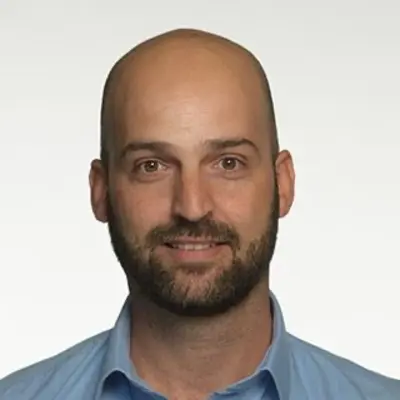
Dr. Anthony Kougkas is an Associate Research Professor of Computer Science and the Co-Founder and Executive Director of the Gnosis Research Center at Illinois Institute of Technology, and Guest Research Faculty at Argonne National Laboratory. He serves as Co-Chair of AI and Research Infrastructure on IIT's Research Innovation Council. His work sits at the intersection of high-performance I/O, scientific data systems, AI infrastructure, and agentic software for research workflows. He builds runtimes, benchmarks, and AI tools that connect large-scale storage and scientific data formats with agents that inspect data, reason over evidence, interact with HPC systems, and preserve provenance. His recent work includes the IOWarp and CLIO ecosystem for context-aware scientific computing, with CLIO Agent for autonomous data management, CLIO Kit for MCP-based HPC and data tools, and CLIO Researcher for reproducible I/O experimentation; LABIOS for label-based agent I/O; and agentic survey infrastructure for gathering community requirements. Earlier he architected Hermes, ChronoLog, and DTIO. He has published more than 50 peer-reviewed papers, is an inventor on a U.S. patent on label-based data representation for I/O, and received the Karsten Schwan Best Paper Award (HPDC 2019) and the CCGrid Best Paper Award (2021). The MLPerf Storage benchmark (MLCommons) is built on DLIO, which he co-authored. He serves as General Chair of SSDBM 2026 and was Program Co-Chair of PDSW at SC (2024-2025), with TPC service at HPDC, IPDPS, CLUSTER, CCGrid, and SC.
Research Vision
We are swimming in data, yet starving for context. Modern scientific and AI workflows generate data at rates that overwhelm conventional storage stacks, but the real bottleneck is not throughput. It is meaning. Current storage systems provide bytes, offsets, and file descriptors. AI agents need context, semantics, and provenance. Dr. Kougkas's research builds the translation layer between these two worlds through context engineering, a discipline of designing systems that orchestrate data, metadata, telemetry, and computational state to give autonomous agents the precise context they need. His systems (IOWarp, Hermes, LABIOS, ChronoLog) translate memory-centric theory into software developed with national laboratories; the MLPerf Storage benchmark is built on DLIO. The frontier is agentic AI for storage: systems that observe workload behavior, reason about data placement, and adapt autonomously.
Top Collaborators
Featured Publications
LABIOS: A Distributed Label-Based I/O System
LABIOS introduced label-based I/O, with asynchronous data movement giving up to 17x higher I/O performance in the HPDC'19 evaluation. Karsten Schwan Best Paper Award at HPDC 2019.
Hermes: A Heterogeneous-Aware Multi-Tiered Distributed I/O Buffering System
Hermes provides multi-tiered I/O buffering that places data across memory, NVMe, SSD, and parallel file systems. The predecessor of IOWarp.
DLIO: A Data-Centric Benchmark for Scientific Deep Learning Applications
DLIO is a data-centric benchmark for deep learning I/O. The MLPerf Storage benchmark (MLCommons) is built on it. Best Paper at CCGrid 2021.
ChronoLog: A Distributed Shared Tiered Log Store with Time-based Data Ordering
ChronoLog captures distributed activity data with temporal ordering, for provenance tracking and replay across scientific workflows.
Bridging Storage Semantics using Data Labels and Asynchronous I/O
A journal article on storage bridging for converging HPC and big data storage systems through unified data management middleware.
Harmonia: An Interference-Aware Dynamic I/O Scheduler for Shared Non-Volatile Burst Buffers
Harmonia introduced a conflict-free coordination mechanism for concurrent I/O operations in multi-tiered buffering systems, enabling lock-free data movement.
Research Interests
Projects












PhD Advisees










Awards & Honors
Selected Keynotes
Professional Service
Funded Research